
(My Learnings from Business Unusual: Enterprises Paving the Way to Zero Waste)
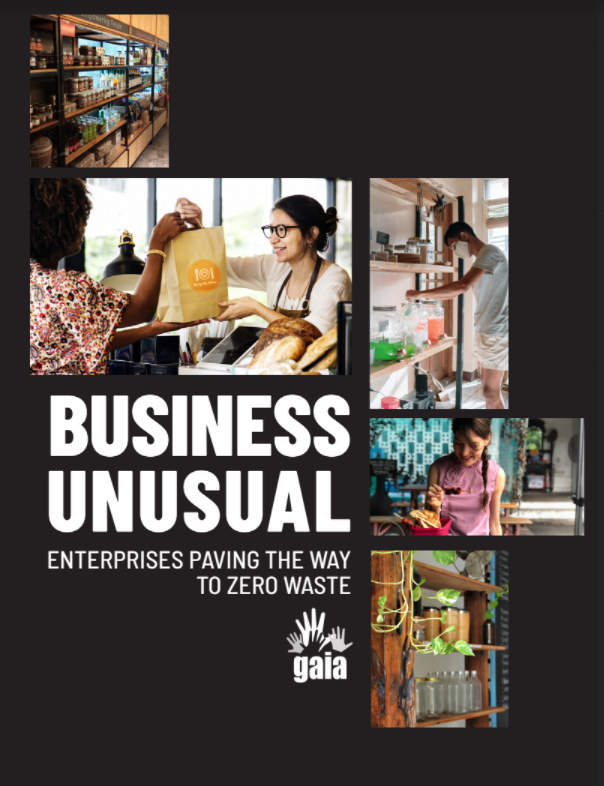
I meant it when I said I felt so blessed that, as the Knowledge Management Officer at GAIA Asia Pacific, I served as the project manager and managing editor of Business Unusual: Enterprises Paving the Way to Zero Waste—a compilation of feature stories about Zero Waste Stores in the region. Why? I got to connect with amazing entrepreneurs that are helping make the world a better place, work with a team of talented writers, and learn a lot and be so inspired in the process.
[Download the book here, It’s free]
For this project, we interviewed 21 social entrepreneurs across Asia Pacific who made their operations and product delivery systems plastics-free. Some of these have long been established businesses, being pioneers of Zero Waste in their countries. A good number were start-ups, one of which started their operations a few months into the COVID-19 pandemic.
I gained valuable insights from the project. I wrote some of the lessons I learned here: That Little Extra: The Heart and Soul of Zero Waste Enterprises. In this article, I discussed the X factor in these Zero Waste enterprises that allowed them to become trailblazers in plastics-free delivery systems. For me, what stood out for all of them was their passion. Their heart. Their genuine desire to make a difference.
But there are a few other things that I learned from talking to these entrepreneurs, which I will focus on in this article: their recipe for success— the lengths they were willing to go to in order to become successful and be true to their advocacy.
Let me share some of these insights in case you are interested in starting and maintaining a Zero Waste store.
Be passionate. You need to really, really want this for you to succeed. Opening a Zero Waste store has additional challenges apart from the usual things one would expect to face when starting a business. One, you will be needing a lot of time looking for and engaging with suppliers who would understand your advocacy and support you in this. You will need patience when people in the community don’t immediately get it why they need to bring their own containers. You will need to tap your creativity when maintaining your plastics-free operations becomes challenging because of supply disruptions, as was experienced by some of the Zero Waste stores we featured during the pandemic.
When Che Abrigo started Sierreza, which is both a Zero Waste store and an advocacy to help farmers, she was alone in her endeavor and the community she chose to work with were skeptical, having heard the things she was telling them from other foundations before her, which, at the end of the project, left them with their lives barely changed.
For months, Che would drive to the community consistently—alone, rain or shine—hell-bent on winning the community over and helping them. Today, she is beloved in the community—she and her growing team. The people’ s lives have positively changed and their operations have become Zero Waste in every step of the way and it’s because Che did not give up on her advocacy even when things were very challenging.
Build a Zero Waste Supplier Base. Having suppliers that understand and support your advocacy is crucial when operating a Zero Waste store. Alison Batchelor, owner of Vietnam’s Refillables Hoi An, tracked down suppliers of products she wanted to carry in her store and engaged with them to supply her their products in big bulks. Malaysia’s NUDE, meanwhile, would check the ingredients of products before selling them to make sure that the products are sustainable.
According to Cheryl Anne Low, co-founder of NUDE, finding quality products that do not harm the earth at reasonable prices requires a lot of research and patience and discussing their advocacy with their suppliers. “Making the suppliers understand the reasons why we would like to buy package-free from them and coming up with workable realistic solutions for both parties is important,” she said.
Be ready for change. While the COVID-19 pandemic gave rise to some businesses and new business models, it also killed numerous businesses, many of them established and worth millions of dollars. It is noteworthy that the Zero Waste stores that weathered the pandemic were quick to see the needs of the hour and respond accordingly.
Australia’s Bring Me Home, for example, recorded less orders at the start of the pandemic because less people ate out due to the restrictions imposed. This means less food excess to rescue. However, they noted that food wastage was happening upstream, at the suppliers (farmers). Bring Me Home was again on a rescue mission by setting up a mechanism to work with farmers.
Another example is the Philippines’ WorkingMum which produces reusable napkins. WorkingMum herself, Cecile Guevarra, added a new product during the pandemic: reusable face masks—thus helping curb the use of disposable face masks.
Finally, Singapore’s barePack strengthened their operations by partnering with big delivery businesses foodpanda and Grab during the pandemic. This allowed them to continue food delivery in reusable containers.
Be forward thinking. Even before the COVID-19 pandemic that forced businesses and institutions to go online, Hong Kong’s Slowood has been working on strengthening their digital operations. When COVID-19 hit, they no longer had to scramble migrating their operations online—they were already thriving there.
“Digital transformation in the retail industry has never been this fast due to the lockdown. We have been developing our online outlet even before the pandemic so we are on track,” shared Peggy Liu of Slowood’s Marketing Team.
Peggy added that they also reviewed their operations and allocated more resources to online development to keep up with the pandemic-related developments.
Use technology. Technology can be a tool for true sustainability if we know how to choose a truly sustainable technology and use it accordingly. A classic example is the internet. Many of the Zero Waste businesses (and even those that aren’t) would not have survived the pandemic had it not been for the Internet. Apps are apparently useful, too. Singapore’s barePack and Australia’s Bring Me Home, both app-based businesses, would not have come into being had it not been for the apps.
There you go, some tips for maintaining a Zero Waste business. I hope the list helps. If you are a Zero Waste business owner and you have some tips to share, please hit the COMMENT button and share away! We’d be happy to hear from you.
 THIS WAY INSTEAD