
Owning a pet is a big and happy milestone. Your days will be filled with purrs and big hugs and laughter. But there will also be days when your heart will be filled with worry, like when your pet get sick. This article will share tips on the things you can do to minimize those worry-filled moments.
1. Save up and cat proof your house. There will be vet visits and food needs, so you need to allocate money for those times. What we do: Save our coins in our piggy bank. This is one trick you can do to be able to afford cat care during emergencies.
Also, as your cat grows older, it will want to explore. With all the risks in the outdoors, it is advisable to keep your pets indoors. Check your windows and other exit points. Normal sized cats (approx: 3kls) generally won’t fit 2” x 2” holes so putting steel matting is enough. But if your cats are smaller, you might want to add a screen with smaller holes.
2. Read up on pet care. Read from reputable sources. Choose those that are written by vets themselves or by animal foundations. Read varying opinions. If one says something is okay for your cats, read another article that says it is not okay. That way, you can see their pros and cons. Don’t focus on the fact that an article says something is good, but on why it might not be good, because some medicines, for example, have contraindications. Some things that worked on one cat may not work on others. Our cat’s well-being depends on the decisions we make; it is our responsibility to make informed decisions.
3. Vet visit. Going to the vet is the best thing you can do to your pet. Your vet can give you medical advice on your pet’s health. Fellow pet owners’ advice can help too, but be very careful on which advice to follow. Choose those that were advised to them by vets.
When going to the vet, even if the clinic is near your house, secure your cats. Put them in a carrier or any well-locked basket with small holes for aeration. There have been numerous horror stories of cats getting lost and getting into accidents because they were not secured during travel and while at the vet, because the cat is mild-tempered and/or used to getting out anyway. But you will never know when something might spook your cat, triggering it to panic and jump out of your arms. You don’t want those horror stories happening to you or your beloved cat.
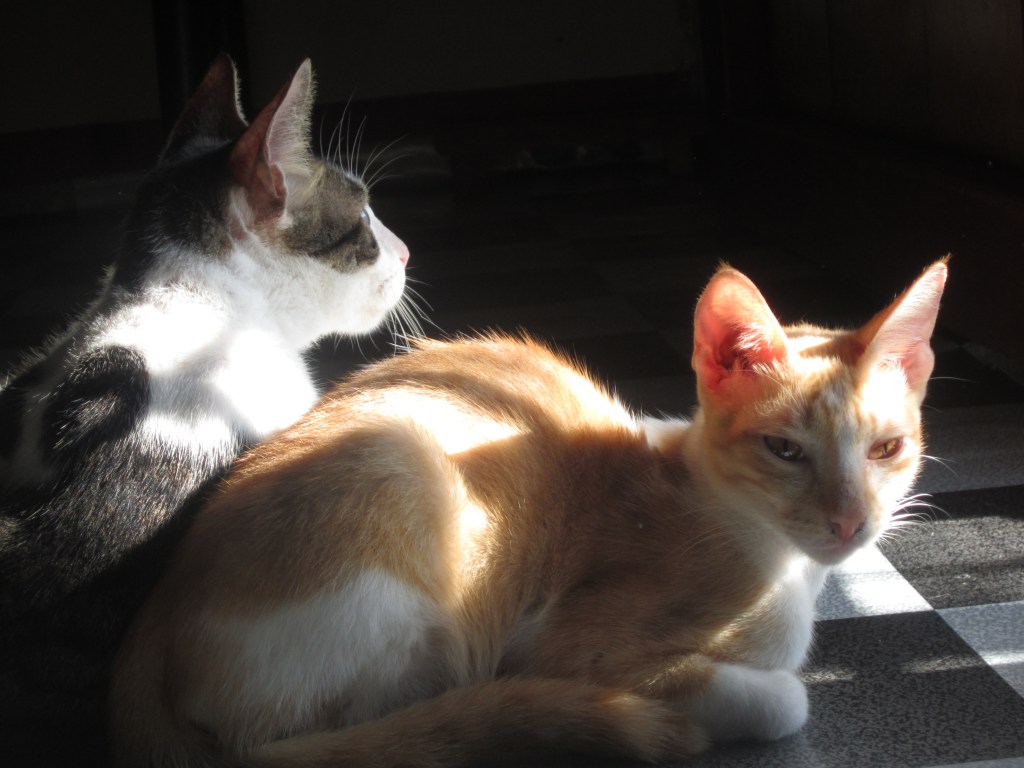
4. Have your cat dewormed. It is best to have the vet do the deworming especially if you have no prior experience. Deworming is your pet’s first line of defense against diseases; you will want to do it right. Mistakes in deworming can cost your cat’s life. As you visit your vet, try to learn about deworming, which dewormer (broad-spectrum) to use, and how to administer it.
5. Vaccinate your cats. Vaccinate with 4-in-one. Panleukemia and other diseases covered by the four-in-one vaccine are every fur parents’ nightmare. Panleukemia is treacherous; it can attack your cat’s immune system so fast that one moment it’s okay, the next moment it is fighting for its life, or worse, breathing its last. More than vitamins, vaccination against these dreadful diseases is the best you can do to your pet.
Also vaccinate your cat against rabies. Cats and dogs are not born with rabies. Rabies is a virus that can infect cats if they are bitten by rabid animals (animals that have been infected with rabies). Common animals that are infected are bats, rats, etc. In the Philippines, vaccinating our pets (specifically dogs) against rabies is mandated by law. (See RA 9842 or the Anti-rabies Act of 2007, Section 5). Vaccinating your cat against rabies prevents them from getting infected if they do get exposed with rabid animals. It will also give you peace of mind it case it accidently bites or scratches you.
7. Food. What you eat is what you are. You eat healthy food, you will have a healthy body. It’s the same with the pets. Home cooked food (common recipe: boiled chicken/fish and squash; no salt or any condiments) is best for your cats. Debone the chicken and fish. We grew up thinking that fish bones are what cats eat and chicken bones are for dogs, but there have been incidents of dogs and cats choking and getting harmed (and some dying) for ingesting bones.
If you can’t cook for your cat, a mix of wet and dry food is also good. Do not feed your cats solely dry cat food. They need moisture and water.
What we do: We give our cats a mix of Aozi and Powercat as morning and evening meals. We give them wet food with lots of water as their snack. We also give them soup (chicken and/or fish boiled in water with paragis leaves or sambong). I had checked paragis with one of the vets we go to and I was told it’s to give it to our cat. But if your cat is sick, please don’t rely on these alone. Use these as supplements, not as medication without vet advice. If you’re feeding your cat dry food, it would be best to soak it in water first to give it moisture. This minimizes its risk of urinary track infection. Unfortunately, some cats don’t like moistened dry food.

8. Get to know your pet very well, including their quirks. Some cats will not like dry cat food. Some will not like wet cat food. Some will be hyper. Some aren’t. Long before cats show signs that they are sick, they may already have been sick for a few days. So it pays a lot if you are observant of your cats. Noticing any changes in their habits and temperaments and getting them checked by a vet early will allow you to catch early onset of diseases. Getting your cats checked and treated early will improve their prognosis. It will also save you costs in the long run. You’ll spend so much more if your cats’ ailment is in advanced stage, and at that point, their chances of getting well becomes slimmer.
9. Spay/Neuter your cat. One of the most responsible things you can do as a cat owner is to spay or neuter (kapon) your cats. Cats, male or female, will benefit from undergoing this procedure. Their risk of developing certain diseases is lessened. Their aggression and marking (and spraying everywhere) will dramatically cease. They will become milder and happier.
Some cat owners would say they want their cat to experience mating and having their own kittens. But cats do not need to experience mating and giving birth to enjoy life. Being healthy and treated well and loved are what they need. Moreover, having them neutered or spayed will prevent unwanted litters. Even if you can support the first kittens of your cat, these kittens will also eventually grow up and want to mate. If you again allow them to experience mating and giving birth, there will be several sets of litters again. So the increase of the number of cats in the household will be exponential, making caring for them burdensome. Will you be able to care for all the kittens, or will you be like others who will dump the unwanted kittens somewhere? Remember, dumping and abandoning pets is a criminal offense, punishable by law. (Read the Animal Welfare Act of 1998 and this article on the benefits of spay and neuter.
10. Bathing your cat. Bathing your cat (especially if their hair is short) is not necessary. Cats spend long hours grooming themselves. Bathing them may make them sick or stress them out. Stress can make cats sick. The only times cats need to be bathed is when they are dirty (they are muddy or they have poops all over them) and they smell. Long-haired cats may also benefit from bathing, but check with your vets (not groomers) on what is the advisable interval. Cats with skin problems may also be prescribed medicated soap and shampoo, hence will need to bathe. If you want to clean your cats, use wet towel to wipe their fur instead.
Note: When your cats are not grooming themselves, it may be a sign that they are sick. Observe them and see changes in their behavior and habits. Have them seen by your vet.
For more information on the instances cats may be bathe and how, read this article from the Central America SPCA.
 THIS WAY INSTEAD